
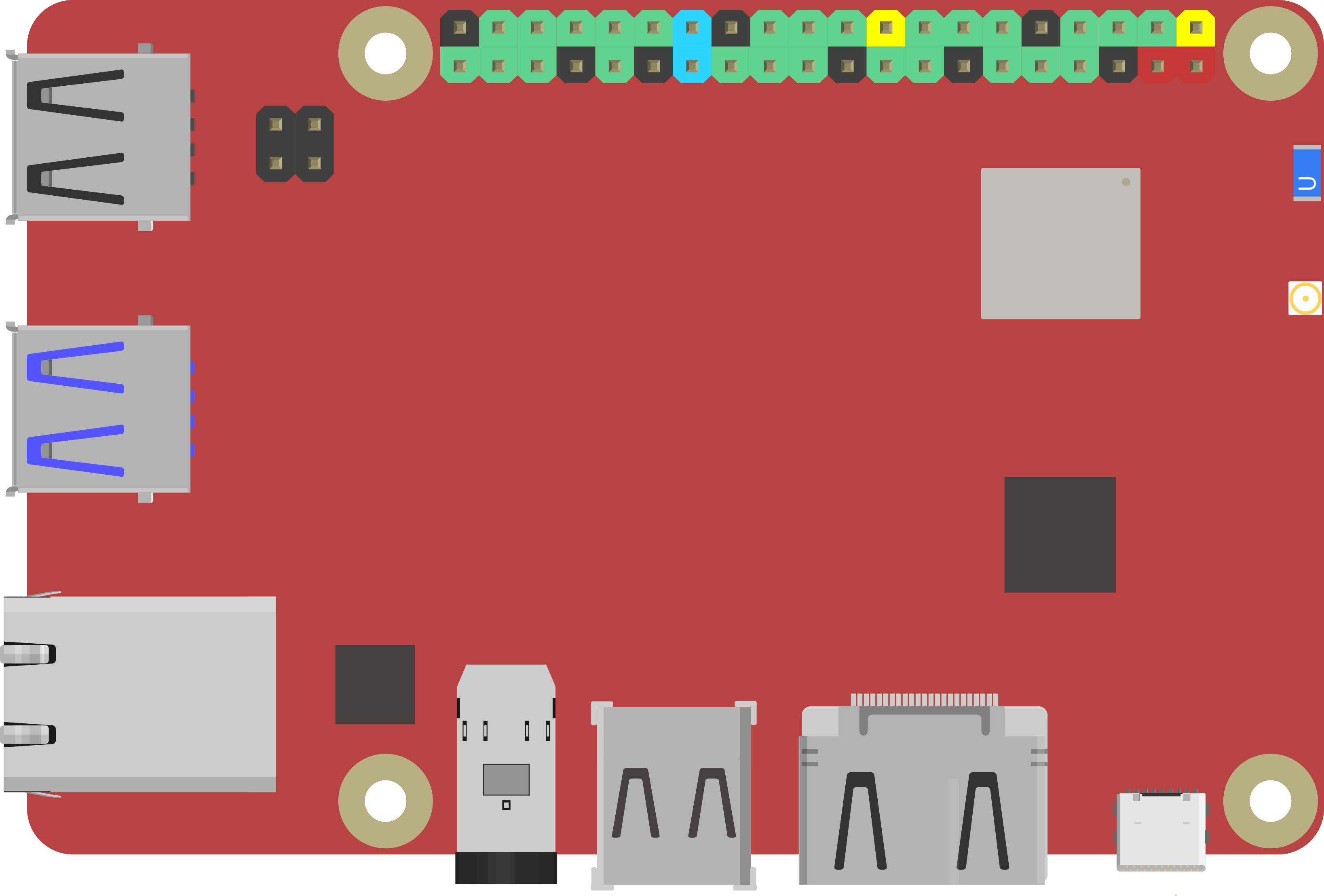
Rock Pi X by Radxa
An affordable x86 brain for your robot
The ROCK Pi X is a small, low-cost Intel computer that runs Windows and Linux. Install ARCx on it, mount it in your robot, and use the robot from a web browser on any phone, tablet or computer.
How the ROCK Pi X works with Synthiam. It is the robot's on-board computer. It runs ARCx on 64-bit Windows 10/11 or Ubuntu 24.04 LTS, or ARC on Windows, just like a desktop PC. Servos and sensors connect through an EZB controller over USB or Wi-Fi; cameras, microphones and speakers plug straight into the board. We recommend ARCx, which runs headless and is used from any browser.
What is the ROCK Pi X?
The ROCK Pi X is a single-board computer (SBC) from Radxa: a full computer, with processor, memory, Wi-Fi and USB, on one compact board. It is Radxa's first x86 SBC, similar in concept to the UP Board and LattePanda, and typically more affordable.
"x86" matters because it is the same processor family as most Windows PCs, so Windows software and drivers work on it. It has an HDMI port for a monitor and a 3.5 mm audio jack with microphone support, so it is easy to set up on a workbench with a screen and keyboard and then mount inside a robot.
Key features, and what they mean for a robot
- Intel Cherry Trail Z8350 quad-core processor: the board's brain; four cores handle several robot tasks at once.
- 64-bit LPDDR3 memory, 1, 2 or 4 GB: working memory for the operating system and ARCx. More memory means smoother multitasking.
- HDMI up to 4K at 30 Hz: robots rarely need 4K, but a monitor is handy during setup.
- 3.5 mm audio jack with microphone: speaker output, voice recognition and microphone input.
- 802.11ac Wi-Fi and Bluetooth 4.2: fast wireless networking and Bluetooth accessories such as game controllers.
- Gigabit Ethernet: a reliable wired link, often best during development.
- USB ports: cameras, storage and robot controllers.
- 40-pin color expansion header: for add-ons; not needed for Synthiam, which uses an EZB controller for robot I/O.
- Real-time clock: keeps time for logs and schedules, especially with a backup battery fitted.
- USB PD and QC power: powered from compatible USB-C chargers and power banks.
ROCK Pi X at a glance
| Type | x86 single-board computer |
|---|---|
| Maker | Radxa |
| Processor | Intel Cherry Trail Z8350, quad-core |
| Memory | 1, 2 or 4 GB LPDDR3 |
| Models | Model A and Model B |
| Connectivity | 802.11ac Wi-Fi, Bluetooth 4.2, Gigabit Ethernet, USB, HDMI, 3.5 mm audio with mic |
| Power | USB-C, USB PD and QC |
| Synthiam uses it for | Running ARCx or ARC on board the robot |
| Website | rockpi.org, getting started |
Radxa lists the ROCK Pi X as discontinued (production stopped in 2022). Existing boards work as described here.
Model A, Model B and memory options
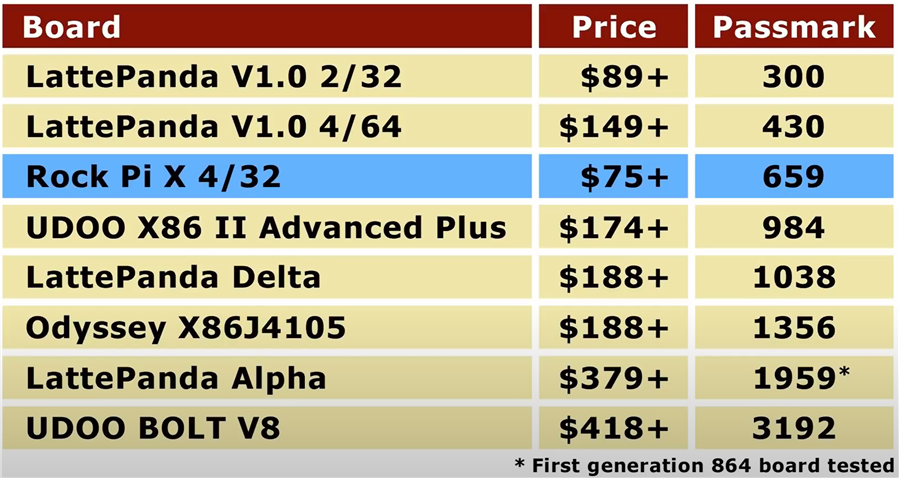
The ROCK Pi X comes as Model A and Model B, each with 1, 2 or 4 GB of memory. For the exact hardware differences between the models, check the manufacturer's specifications for your board version. The chart from our friends at Explaining Computers is a helpful overview.
Our recommendation: choose 4 GB if you can. An operating system, ARCx, a camera and several robot skills all share that memory.
What you can do with it in Synthiam
Control from any browser
ARCx runs on the board; you use it from a phone, tablet or laptop. Several people at once, and the robot keeps running when the browser closes.
Servos and sensors
An EZB controller over USB or Wi-Fi adds servos, PWM, digital, analog, I2C and UART ports for movement panels, animations and sensors.
Camera and vision
USB cameras with Camera Source (usb) for face, color, glyph and object tracking.
Voice and sound
The audio jack with microphone support gives the robot ears and a voice: speech recognition, text to speech and sound playback.
AI agents
ARCx is an MCP server, so AI agents can see, drive and program the robot, alongside conversational AI robot skills.
Scripts, Custom UI, remote
Blockly, JavaScript and Python; touch-friendly Custom UI screens; and Exosphere for remote control and telepresence.
Set up ARCx on the ROCK Pi X
- Install a 64-bit operating system. Windows 10 or 11 (64-bit) with the drivers below, or Ubuntu 24.04 LTS (64-bit) Server or Desktop. ARC needs Windows.
- Install ARCx. Follow Install ARCx on Windows 64 or Install ARCx on Linux x64.
-
Open ARCx from another device. Start ARCx Server (Bind Any) on Windows, or on Ubuntu:
Then browse to./ARCx -b http://0.0.0.0:5000http://<rock-pi-address>:5000. -
Connect an EZB controller. Add the Ezb Connection robot skill and enter the controller's port
(
COM3,/dev/ttyUSB0) or IP address, then connect. On Ubuntu, add your user to thedialoutgroup first. - First test. Move a servo with the Servo robot skill or drive with a movement panel, then add a camera and speech.
-
Run headless. Open the project at start-up (the Windows shortcut
-foption, or asystemdservice on Ubuntu, as the install guides describe) and unplug the monitor.
Windows drivers for a smooth setup
Some ROCK Pi X boards need specific Windows drivers before Wi-Fi, audio, graphics acceleration and other hardware work correctly. Synthiam has assembled a driver package to get your board running reliably.
Download ROCK Pi X Windows 10 drivers (x64)
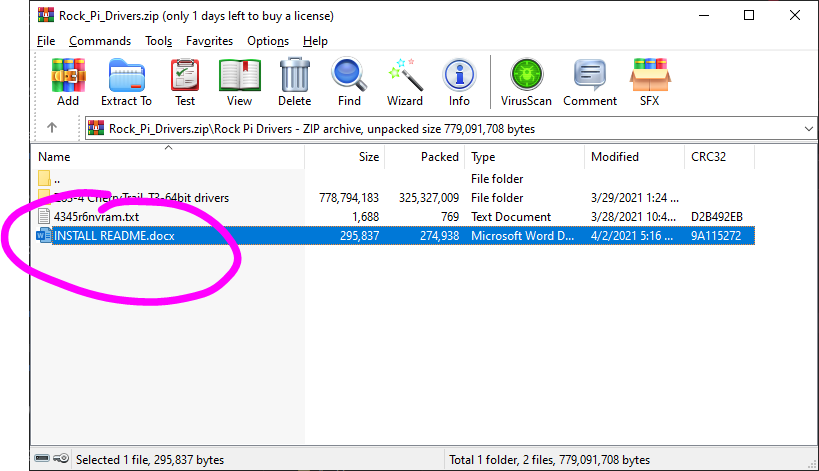
Follow the steps in order. After extracting the ZIP file, open the included README and follow its step-by-step instructions carefully. Installing drivers in the recommended order prevents missing devices and unstable behavior.
Both run on it; ARCx is recommended
ARCx Recommended
- 64-bit Windows 10/11 or Ubuntu 24.04 LTS.
- Headless; used from any web browser by several people at once.
- MCP for AI agents; robot skills from the Synthiam store.
ARC
- Windows desktop application, installed like on any PC.
- Viewed on an HDMI monitor or through remote desktop software.
- A good choice if you already have ARC projects.
Small computers run robots very well but sometimes need tuning, especially with Windows. Our Tips to Make a Robot guide covers freeing storage space, improving performance (start-up apps, power settings, updates), powering the board reliably and running headless with remote desktop tools.
When something does not work
-b http://0.0.0.0:5000 (Ubuntu), browse to the board's IP address rather than 127.0.0.1, and allow port 5000 through the firewall.
Frequently asked questions
Give your robot an x86 brain
Install ARCx on the ROCK Pi X and control your robot from any browser.
Friday is good for me. Actually any night is good.
yes, would love to see this in action
Hi DJ, How would ARC run on this? Would all the servo and i/o be handled through the GPIO pins or would it still connect to an EZController in some way? How would it access the physical outside world?
Unlike the latte panda there is no onboard arduino but would be nice if we could talk direct to the I/O ports.
@nink, For the cost saving, you can add as many arduinos as you wish to the usb ports. Jeremie is thinking about making an EZ-B style add-on for it that will have a built-in audio amplifier and servo ports, etc...
@Perry - servos won't connect directly to it. It would need some sort of i/o controller connected. The gpio's of these type of computers can't bit bang the pwm fast enough for servos - so an i/o controller does a better job
Looks good and compares well with the Latte Panda. Very limit places to purchase in the UK at the moment, but I’m sure that will change once it’s been out there for a while. Look forwards to the hack.
I'm going to get one of these as soon as I find a better buying choice. I can only find one that will ship to the USA and it takes 20 days. Yeiks.
I’ll let them know that feedback about limited purchasing options. I think because it’s so new they have limited sellers